The short answer
Sheep wool does the most for your sleep when it sits on top of the mattress, where it can breathe, and when it hasn’t been chemically treated. Untreated virgin Swiss sheep wool doesn’t trap heat; it insulates, which helps your body stay cool when it’s hot and warm when it’s cold. It can absorb up to 35% of its own weight in moisture without feeling damp, so the moisture you give off overnight is taken up instead of leaving you on a clammy surface. In our bed, the wool is a separate overlay between the natural VitaTalalay latex mattress and the organic cotton cover, not something sealed inside.
- 100% untreated virgin Swiss sheep wool
- On top of the mattress, not inside
- Helps even out temperature
- Absorbs moisture without feeling damp
- Made in Canada by a family shop
Conventional wool and synthetics vs our untreated Swiss sheep wool, at a glance
| Typical treated wool or synthetic fill | Our untreated virgin Swiss sheep wool | |
|---|---|---|
| What it is | “Wool” can legally include a share of synthetics, and is usually moth-proofed, bleached, dyed and coated to make it washable. | 100% untreated virgin Swiss sheep wool from living sheep. |
| Temperature | Synthetic fibres like nylon cling to the skin and limit air circulation. | Insulates without trapping heat, and doesn’t cling to the skin, so air can circulate. |
| Moisture | Cotton holds around 8% of its weight before feeling damp; polyester holds even less. | Absorbs up to 35% of its own weight without feeling damp. |
| Odours | Synthetic fibres don’t clear odours on their own. | As a natural fibre, it helps clear odours when it’s aired out. |
| Fire behaviour | Depends on the fibre and its treatment. | Naturally fire-resistant and self-extinguishing. |
| Where it sits | Often sealed inside the mattress, where it can’t breathe. | On top of the mattress as its own overlay, so it can breathe and be aired out. |
| Lifespan | Varies. | Keeps most of its properties for about 10 years, then it should be replaced. |
Why untreated wool, and why it matters
It is amazing to think that sheep carry their houses on their backs. That fleece makes 100% untreated virgin Swiss sheep wool one of the most unique, completely natural and multi-purpose fibres available, and an excellent material to sleep on.
Most wool on the market is something else. A sweater sold as sheep wool is allowed to contain a share of other materials, such as synthetics. It has usually been treated against moths, bleached and dyed, then given a special coating to make it washable, and it can carry residues from those dyeing and finishing steps.
Many people who think they’re allergic to wool are actually reacting to those chemical treatments, or to old, worn-out wool.
100% pure virgin Swiss sheep wool, up close.
To get the full benefits, the wool must come from living sheep. It keeps most of its properties for about 10 years after shearing; after that the wool “dies” and should be replaced.
How wool handles temperature and moisture
Even temperature
Sheep wool helps keep the body at an even temperature. It doesn’t trap heat; it insulates instead, so it helps you stay cool when it’s hot and warm when it’s cold, without big temperature swings during the night. Because it doesn’t cling to the skin the way nylon does, air can circulate.
Moisture without the clammy feeling
Wool can absorb up to 35% of its own weight without feeling damp. Cotton holds only around 8% before it feels damp, and polyester holds even less. That matters because your body gives off moisture overnight. The wool takes it up, so you’re not lying on the damp, clammy surface that can leave you feeling cold on synthetic materials.
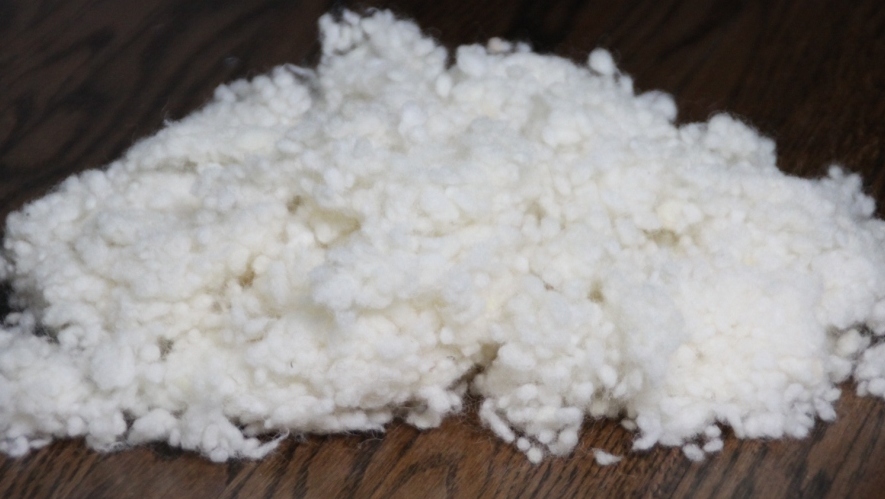
Untreated virgin Swiss sheep wool before it goes into the overlay.
“We love the wool pad that helps regulate temperature.” — Jerome Q. (Whitehorse, YT)
Other natural properties of untreated wool
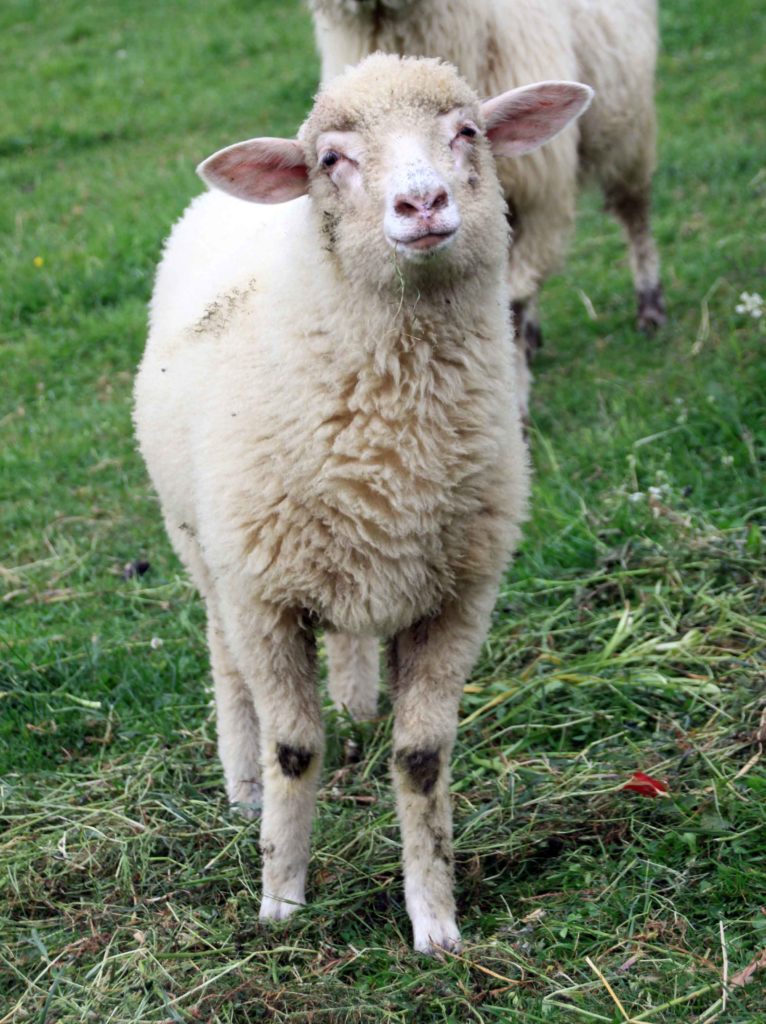
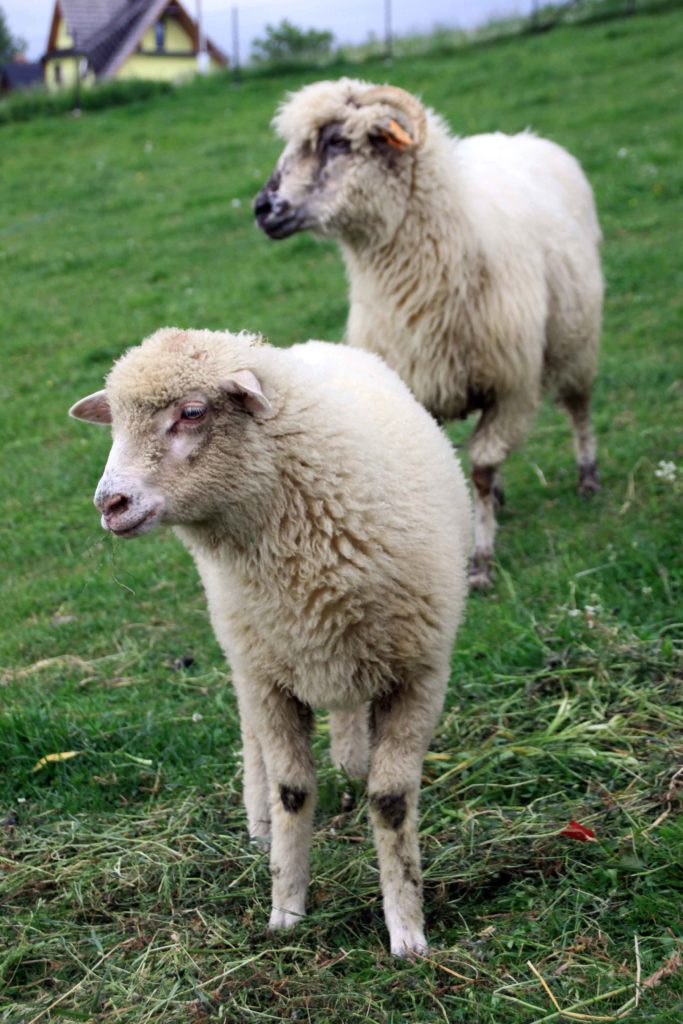
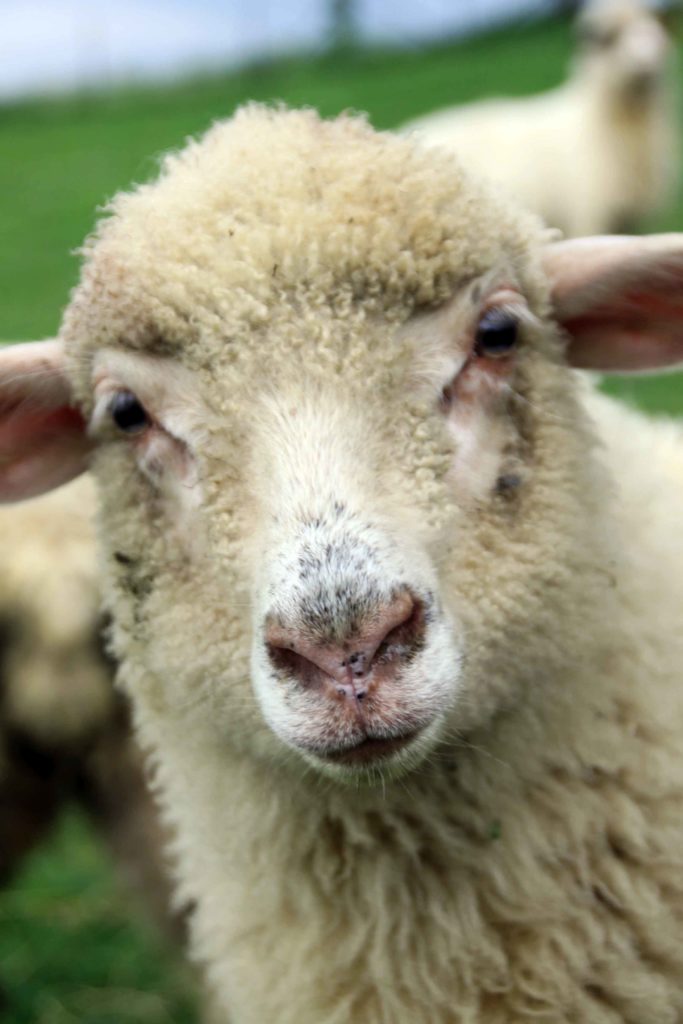
Wool is naturally fire-resistant and self-extinguishing.
Where the wool sits in our bed, and why not inside the mattress
Some mattress companies advertise sheep wool, but the wool is sealed inside the mattress. Wool needs to breathe, so it can’t do its job for long in there. In our bed, the wool is its own overlay on top of the mattress, where it can breathe and be aired out.
From the floor up, the sleep system is:
- Solid wood frame in Soft Maple, Aspen, Black Cherry or Southern Yellow Pine
- Movable slat system
- Natural VitaTalalay latex mattress
- Untreated sheep wool overlay (this page)
- Organic cotton cover
The sleeping system is built without metal. Learn more on our movable slat system page and our latex vs memory foam page.
Caring for the wool overlay
- Air it out often. Wool works by taking up moisture and odours and releasing them, so regular airing keeps it working for its full life.
- Don’t wash it in warm or hot soapy water. Wool felts, and in warm or hot soapy water it will most likely shrink.
- Plan to replace it after about 10 years. That’s roughly how long it keeps most of its properties.
More day-to-day notes are on our Setup & Care page.
Frequently asked questions
Is the wool treated with chemicals?
No. We use 100% untreated virgin Swiss sheep wool. It isn’t moth-proofed, bleached, dyed or coated.
I think I’m allergic to wool. Can I sleep on it?
Many people who react to wool are reacting to the chemical treatments in conventional wool, or to old, worn-out wool, and our wool is untreated. We can’t promise how you’ll react, though. If you have a diagnosed wool allergy, check with your doctor first.
Will wool make me too hot?
Wool insulates without trapping heat, and it absorbs up to 35% of its own weight in moisture without feeling damp, so it helps you stay cool when it’s hot and warm when it’s cold.
Why is the wool on top instead of inside the mattress?
Wool needs to breathe. Sealed inside a mattress it can’t breathe or be aired out, so it doesn’t do its job for long. As a separate overlay on top, it can.
How long does the wool last?
It keeps most of its properties for about 10 years, then it should be replaced. Air it out often during that time.
Can I wash it?
Not in warm or hot soapy water. Wool felts, and it will most likely shrink. Airing it out regularly is the main care.
Does the pillow use wool too?
Yes. Our adjustable latex pillow is wrapped in organic cotton and sits inside a sheep wool overlay, the same natural materials as the bed.
How long does it take, and how is it shipped?
Every bed is made to order, so please allow 2 weeks for the standard bed, or 3 weeks with headboard add-on, plus shipping. The bed ships as individual components, which makes it easier to bring through narrow doorways and up tight stairs.
See the full bed, or ask us about the wool
The wool overlay comes with every Swiss Dream Bed, on top of the natural VitaTalalay latex mattress and movable slat system. We don’t post prices online because they depend on where you live, so ask us for the price list for your area.
Every bed is made to order in our New Brunswick workshop: please allow 2 weeks for the standard bed, or 3 weeks with headboard add-on, plus shipping.