The short answer
Most adults need 7 or more hours of sleep a night, on a regular basis. Good sleep is as much a part of a healthy routine as eating well and staying active, yet it’s often the first thing a busy schedule squeezes out. You’ll spend about a third of your life asleep, so it pays to get the basics right: a steady schedule, a few simple habits, and a bedroom that is quiet, cool and dark, with a bed that supports you.
- Adults: 7+ hours a night
- Same bedtime and wake time
- Quiet, cool, dark bedroom
- Based on NIH, CDC & AASM guidance
How much sleep do you need?
Sleep needs change with age. The U.S. National Heart, Lung, and Blood Institute (NHLBI) gives these recommended amounts:
| Babies 4 to 12 months | 12 to 16 hours a day (including naps) |
|---|---|
| Children 1 to 2 years | 11 to 14 hours a day (including naps) |
| Children 3 to 5 years | 10 to 13 hours a day (including naps) |
| Children 6 to 12 years | 9 to 12 hours a day |
| Teens 13 to 18 years | 8 to 10 hours a day |
| Adults 18 and older | 7 to 8 hours a day |
The American Academy of Sleep Medicine and Sleep Research Society recommend that adults sleep 7 or more hours per night on a regular basis, and the CDC uses the same 7-or-more guideline for adults 18 to 60. Some people need more.
Lost sleep also adds up. NHLBI calls this sleep debt: lose 2 hours a night and you’re 14 hours short by the end of the week, and naps or sleeping in on weekends don’t fully make up for it.
Sources: NHLBI: How much sleep is enough; AASM/SRS consensus statement; CDC: About sleep
Everyday habits that help
NHLBI suggests these steps to improve your sleep habits:
- Go to bed and wake up at the same time every day, and keep weekends within about an hour of your weekday schedule.
- Use the hour before bed for quiet time. Avoid intense exercise and bright screens.
- Avoid heavy or large meals within a few hours of bedtime, and avoid alcohol before bed.
- Avoid nicotine and caffeine. The effects of caffeine can last up to 8 hours.
- Spend time outside every day when possible, and be physically active.
- Keep your bedroom quiet, cool and dark.
- If you nap, keep it to about 20 minutes, and limit naps if you have trouble falling asleep at night.
Sources: NHLBI: Healthy sleep habits
Set up your bedroom for sleep
Cool. The Sleep Foundation puts the best bedroom temperature at about 65°F (18.3°C), give or take a few degrees, and says most doctors suggest 65 to 68°F. Your body temperature naturally drops as you fall asleep, and a room that’s too warm can leave you restless.
Dark and quiet. Bright light, including from TV and computer screens, can signal your brain that it’s time to be awake (NHLBI). A dim night light is fine if you need one.
Bedding that doesn’t trap heat. The Sleep Foundation also lists breathable mattresses, sheets and bedding among the ways to keep cool at night.
Sources: Sleep Foundation: Best temperature for sleep; NHLBI: Healthy sleep habits
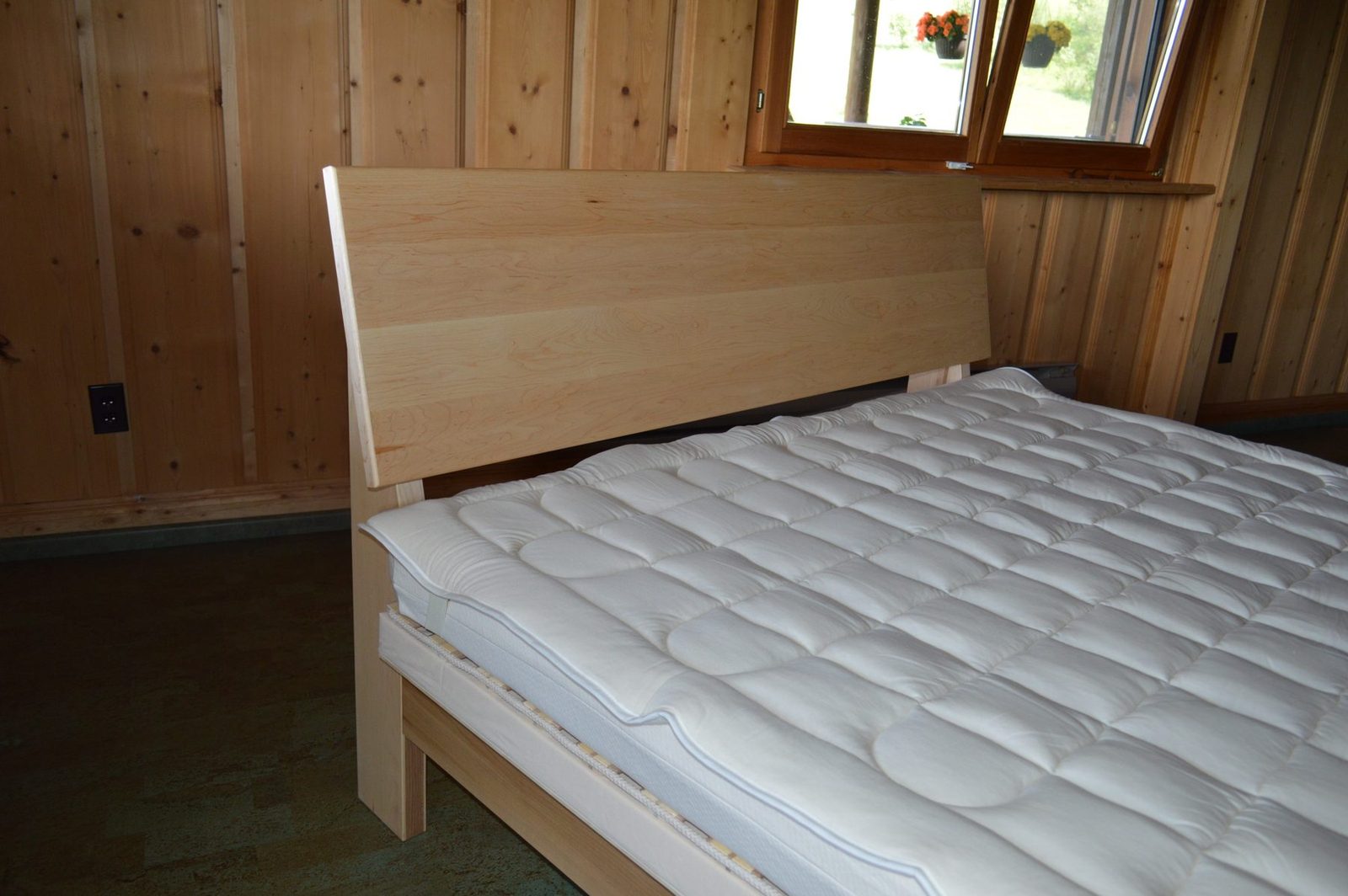
A quiet, simple bedroom: one of our beds with a slanted Maple headboard.
When to talk to a professional
The CDC advises talking to your healthcare provider if you have problems sleeping. Snoring, waking up gasping, constant daytime sleepiness or long-term insomnia can have medical causes that a new bed or new habits won’t fix.
Sources: CDC: About sleep
Your bed is part of your sleep environment
Just as healthy eating starts with the food you choose, comfortable sleep starts with the bed you sleep on. A bed should fit the person on it, but people differ a lot in weight, size and build, and so do couples sharing one bed.
That’s why we designed our bed to adjust to the person on it. The movable slat system (solid Aspen slats resting on natural latex strips) presses down under heavier areas like shoulders and hips and stays up under the waist. Queen and King sizes have two independent slat units, one for each sleeper.
On top sit a natural VitaTalalay latex mattress, untreated Swiss sheep wool and an organic cotton cover. There’s no polyurethane foam, and the whole bed, headboard included, is built without metal.
How the movable slat system works · Latex vs memory foam if you sleep hot · Untreated Swiss sheep wool
Watch the slats adjust to different shapes and pressure.
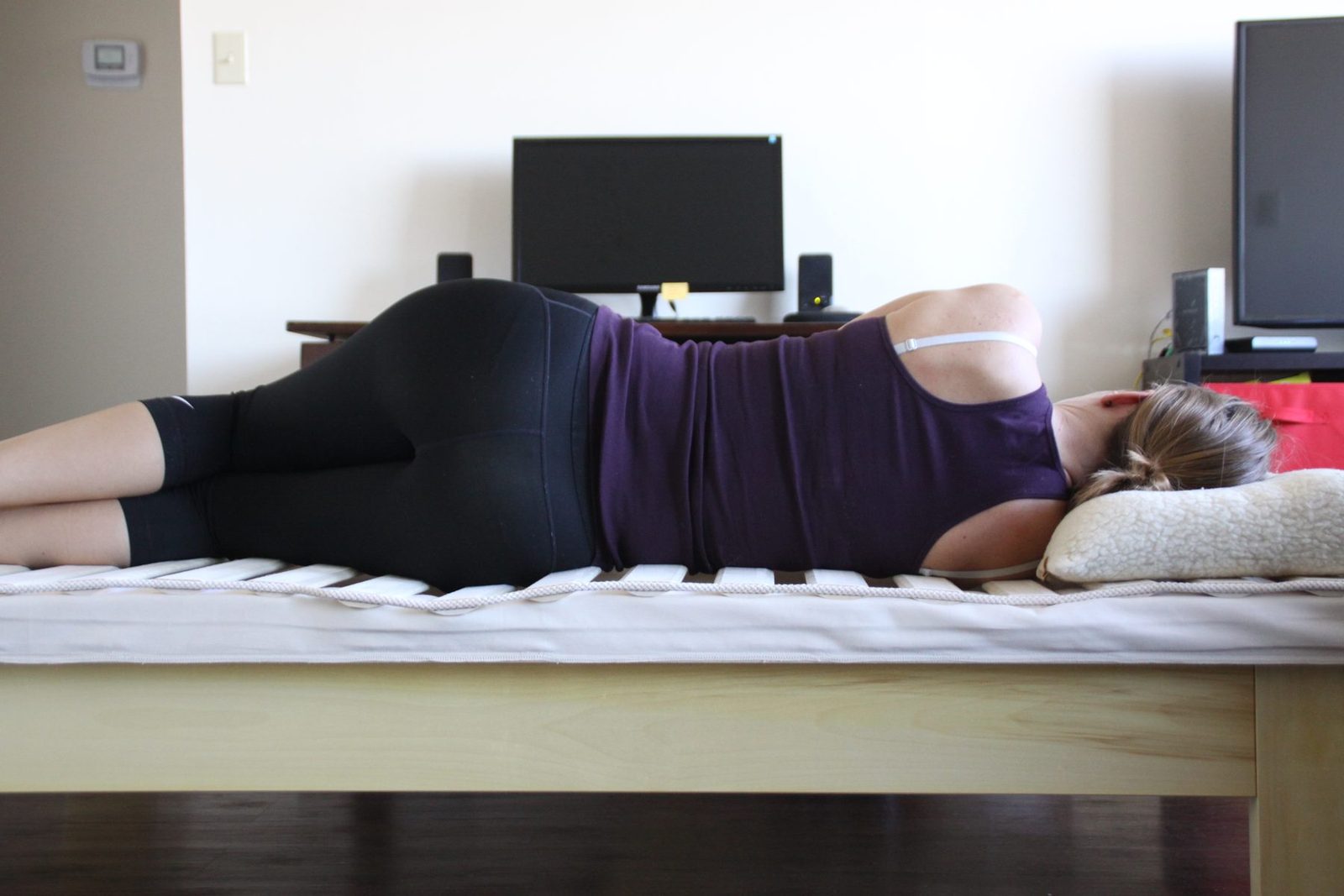
Side sleeping: the slats and latex give way under the shoulder and hip and stay up under the waist.
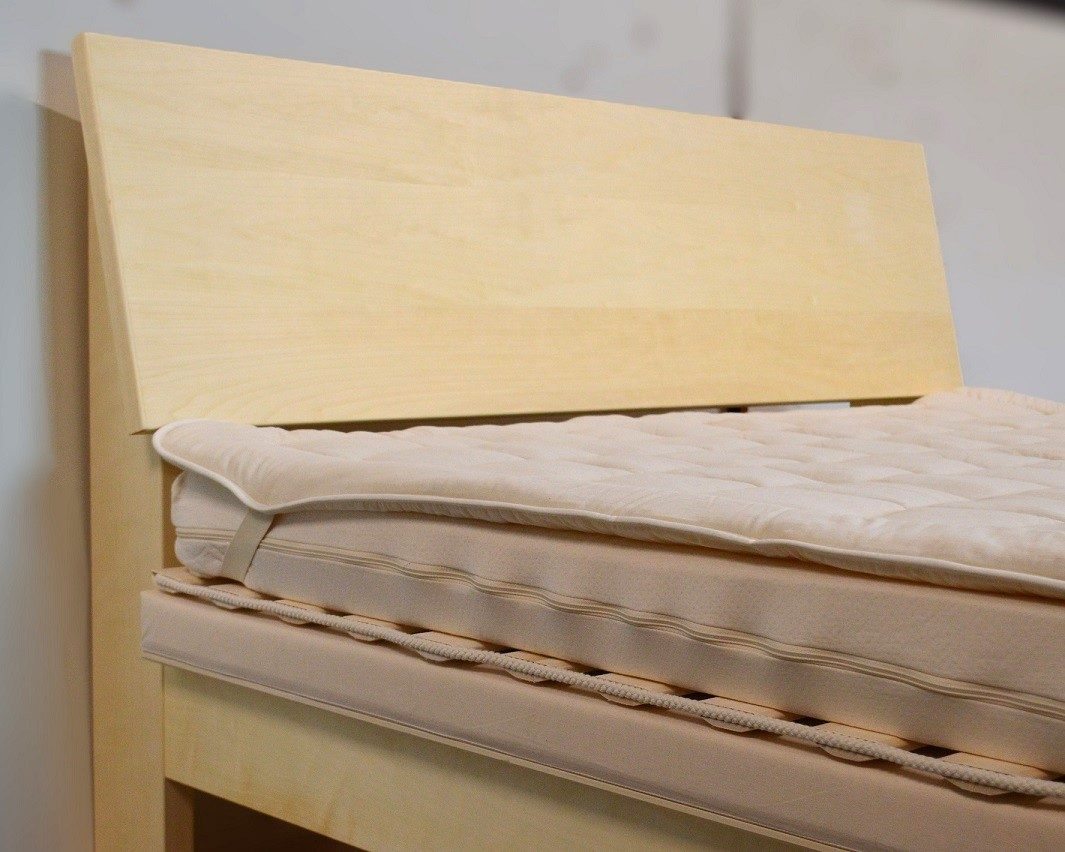
The quilted overlay of untreated Swiss sheep wool, on a bed with an Aspen slanted headboard.
Know what you sleep on: the layers going together in our New Brunswick workshop (25 s).
“We live in a very hot climate and the bed is cool to sleep on. It’s free of chemicals and metal.”
★★★★★ Hannah Daddino · Google review
“We love the wool pad that helps regulate temperature.”
★★★★★ Jerome Q. (Whitehorse, YT) · customer review
Frequently asked questions
How many hours of sleep do adults need?
At least 7 hours a night on a regular basis, according to the AASM and Sleep Research Society and the CDC. NHLBI lists 7 to 8 hours for adults.
Can I catch up on sleep at the weekend?
Not fully. NHLBI notes that lost sleep adds up as sleep debt, and that naps and sleeping in don’t provide all the benefits of regular nighttime sleep. Source.
What temperature should my bedroom be?
About 65°F (18.3°C), give or take a few degrees, according to the Sleep Foundation.
How late can I have coffee?
NHLBI says caffeine’s effects can last up to 8 hours, so a late-afternoon coffee can make it hard to fall asleep. Source.
I sleep badly most nights. Will a new bed fix it?
Not necessarily. A supportive, comfortable bed is one part of good sleep, along with habits and your bedroom. If sleep problems keep going, talk to your healthcare provider.
Curious about our bed?
If your bed is the part of your sleep setup you want to change, we’re happy to explain how ours works. We don’t post prices online because they depend on where you live, so ask us for the price list for your area.
Every bed is made to order in our New Brunswick workshop: please allow 2 weeks for the standard bed, or 3 weeks with headboard add-on, plus shipping.